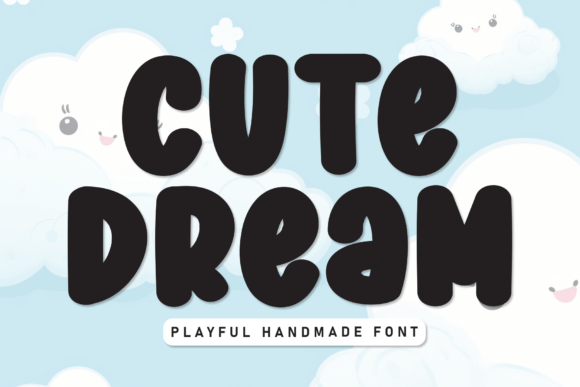
Cute Dream: A Playful Font for Joyful Design Projects
When it comes to crafting designs that feel warm, inviting, and full of personality, choosing the right font is essential. Cute Dream is an incredibly playful and chunky display font that radiates fun and approachability. Its extra-bold, smoothly rounded letterforms give it a soft, bubble-like appearance, making it a go-to choice for designers looking to evoke a sense of youthfulness and whimsy in their work.
What Makes Cute Dream Unique?
At first glance, Cute Dream stands out due to its bold, rounded structure and soft curves. Unlike traditional sans-serif or serif fonts that prioritize formality or neutrality, Cute Dream leans into its personality. Each letter is designed to feel tactile and approachable, almost like a cartoon bubble or a hand-drawn illustration. This makes it ideal for use in projects where the goal is to create a lighthearted, memorable impression.
The font’s boldness ensures it remains legible even at a glance, while its rounded edges soften the overall appearance. This combination of strength and softness is what makes Cute Dream versatile enough to be used in both digital and print media, especially in contexts where a sense of warmth and friendliness is key.
Design Challenges That Cute Dream Can Solve
Many designers struggle with finding the right visual tone for projects aimed at younger audiences or those wanting to convey a sense of innocence and joy. Whether it’s for children’s book covers, toy packaging, or social media content for lifestyle brands, the typography needs to match the emotional tone of the message.
In these situations, Cute Dream serves as a practical solution. Its bubbly, cheerful aesthetic naturally aligns with themes of playfulness and creativity. Designers can rely on it to bridge the gap between visual appeal and readability, especially when they need to capture attention quickly without overwhelming the viewer.
Practical Applications of Cute Dream
Cute Dream shines in a variety of real-world design applications. Here are a few common uses where this font truly comes to life:
- Children’s branding: From logos to product labels, Cute Dream adds a youthful charm that appeals to both kids and parents.
- Product packaging: Especially for small businesses and indie brands looking to stand out on shelves, Cute Dream’s soft yet bold appearance helps create a memorable visual identity.
- Social media graphics: Whether it’s for Instagram stories, Pinterest pins, or TikTok thumbnails, Cute Dream makes text pop while keeping the overall vibe light and engaging.
- Printables and stickers: For creators offering digital downloads or physical products like planners and journals, Cute Dream enhances the handmade and whimsical aesthetic.
How Different Designers Use Cute Dream
While Cute Dream has a distinct style, its flexibility allows for creative interpretation. Some designers use it as a primary headline font to set the tone for a design, while others layer it with more neutral fonts to create visual contrast without losing the playful essence.
For example, a brand targeting young parents might pair Cute Dream with a clean, minimalist sans-serif to balance fun and professionalism. Meanwhile, a boutique bakery might use it across all branding materials—menus, packaging, and signage—to create a cohesive, approachable look.
Graphic designers working on digital illustrations or character-based designs often use Cute Dream to label or caption their work, ensuring the text feels like a natural extension of the artwork itself.
Getting the Most Out of Cute Dream
Like any display font, Cute Dream works best when used intentionally. Here are a few practical tips for incorporating it into your design projects:
- Use it for headlines only: Due to its bold and decorative nature, Cute Dream is best suited for short bursts of text like headlines, titles, or callouts rather than long blocks of body copy.
- Pair it wisely: Combine Cute Dream with simpler fonts to maintain readability and visual balance. Sans-serif fonts with clean lines often complement it well.
- Consider spacing: The rounded edges and bold weight can make letters appear closer together. Adjusting tracking or letter spacing can enhance legibility, especially in smaller sizes.
- Test across platforms: Always preview how Cute Dream looks on different devices and print materials to ensure consistency in appearance and tone.
Who Should Use Cute Dream?
Cute Dream is particularly well-suited for a variety of users, including:
- Freelance designers creating work for clients in the children’s market or lifestyle niches.
- Entrepreneurs launching small brands that want to project a friendly, approachable image.
- Content creators looking to enhance the visual appeal of their digital assets without sacrificing clarity.
- Educators and parents designing fun learning materials or personal projects that need a cheerful touch.
Whether you're building a logo from scratch or adding text to a digital illustration, Cute Dream offers a reliable way to inject personality and warmth into your work.
Final Thoughts
In today’s design landscape, standing out while maintaining clarity and charm is no small feat. Cute Dream offers a unique blend of boldness and softness that makes it not only visually appealing but also functionally effective. Whether you’re designing for children, crafting social media content, or building a brand that values warmth and creativity, Cute Dream is a font that delivers both style and substance.
By understanding the strengths of Cute Dream and applying it thoughtfully, designers can create work that feels both professional and personable—perfect for connecting with audiences who appreciate a touch of whimsy in the everyday.