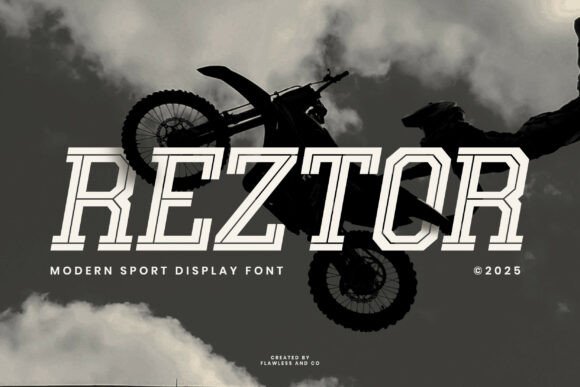
Reztor: A Bold Font for Impactful Visual Communication
Typography plays a critical role in how visual messages are received, interpreted, and remembered. In environments where clarity, strength, and urgency matter, the choice of font can significantly influence outcomes. Reztor, a powerful modern sport display font, is engineered to deliver high-impact visuals through its sharp edges, bold structure, and angular design. Whether used in branding, advertising, or digital media, Reztor commands attention and conveys a sense of motion and determination.
Understanding Reztor in the Context of Design Workflows
Reztor fits naturally into the visual design phase of a broader creative process. Designers often begin with conceptual sketches or wireframes before selecting typefaces that align with the project’s tone and objective. Reztor is especially effective when the goal is to evoke energy, competition, or decisiveness. Its visual strength makes it a go-to option for sports branding, promotional materials, app interfaces, and event visuals where boldness and readability are essential.
Before the Design Phase: Planning and Typeface Selection
Before launching into the visual design, it's important to consider how typography supports the message. Reztor should be evaluated alongside other design elements like color schemes, imagery, and layout structure. During this planning phase, designers and marketers may conduct moodboarding or competitor analysis to ensure the font aligns with brand identity and audience expectations. Choosing Reztor early in the process allows for consistency across assets and streamlines design execution.
During Implementation: Integrating Reztor into Projects
Once the decision to use Reztor is made, integration into design tools becomes the next step. Reztor works seamlessly in common design platforms such as Adobe Creative Suite, Figma, and Sketch. Designers can import the font and apply it to headlines, call-to-action buttons, or key visual elements. It's especially effective when used sparingly to highlight important information rather than overwhelming the layout with excessive text.
Practical Use Cases Across Industries
Reztor’s versatility makes it applicable across a range of industries and use cases. Here are a few examples of how different professionals incorporate Reztor into their workflows:
- Sports Brands: Use Reztor in logo design and merchandise to communicate strength and agility.
- Marketing Teams: Apply Reztor in promotional banners and digital ads to capture attention quickly.
- App Developers: Integrate Reztor into UI elements like scoreboards or progress indicators to enhance user engagement.
- Event Planners: Implement Reztor in event branding and signage for a dynamic, energetic look.
After Launch: Evaluating Typography Performance
Even after a project is live, the role of typography continues. Reztor's readability and visual impact should be assessed in real-world conditions. Designers and marketers can gather feedback from users or analyze engagement metrics to determine if the font choice supports the intended message. A/B testing with alternative fonts can also help validate Reztor’s effectiveness in specific contexts.
Compatibility and Workflow Efficiency
One of the key considerations when using Reztor is compatibility across platforms and devices. The font should render clearly on both desktop and mobile screens. Designers should also test Reztor in different color contrasts and background settings to ensure legibility. For web-based projects, using web-safe formats like WOFF or TTF ensures smooth integration and faster load times.
Combining Reztor with Complementary Fonts
While Reztor is powerful on its own, pairing it with complementary fonts can enhance overall design harmony. A clean sans-serif like Helvetica or a modern serif like Roboto can provide balance when used for body text. The key is to maintain visual contrast while ensuring typographic consistency throughout the design system.
Long-Term Use and Brand Consistency
For businesses and creatives building long-term brand identities, Reztor can serve as a signature typeface. Its distinctive look helps establish visual recognition across marketing materials, social media, and packaging. Maintaining a consistent usage guide—covering font sizes, spacing, and application rules—ensures that Reztor remains a cohesive part of the brand language over time.
Managing Reztor Across Teams and Projects
In collaborative environments, it’s important to standardize how Reztor is used. Design teams can store font files in shared asset libraries and include Reztor in brand style guides. Project managers should ensure that all team members have proper licensing and access to the font files to avoid inconsistencies or legal issues during production.
Quality Control and Usability Testing
Before finalizing any design that uses Reztor, conducting usability tests is a best practice. This includes checking how the font appears on different screen sizes, under various lighting conditions, and for users with visual impairments. Accessibility tools can help evaluate contrast ratios and readability scores to ensure the design remains inclusive and effective for all audiences.
Preparing for Future Projects
Once Reztor has been successfully implemented in one project, it can become a go-to resource for future work. Designers can create reusable templates, UI kits, and style libraries that incorporate Reztor, reducing setup time and ensuring brand continuity. Keeping a record of successful applications also helps in making informed decisions for upcoming campaigns or product launches.
Conclusion: Making Reztor a Strategic Design Asset
Reztor is more than just a font—it's a strategic tool for creating visuals that demand attention and convey strength. By understanding where and how to integrate Reztor into design workflows, professionals can elevate their creative output and maintain a consistent, high-impact presence across all visual communications. Whether used for branding, advertising, or digital interfaces, Reztor delivers performance where it matters most.